
I am not a minimalist. I try to keep my consumption lower than it could be, but I am not trying to own as little as possible. I enjoy useful things, appreciate good design and do not think owning fewer things automatically makes someone wiser.
Still, clothes and shoes are two areas where I have consciously set limits. Not because I dislike fashion. In fact, I am very fond of shoes. But liking something does not mean I need to keep buying more of it.
My approach is simple: buy fewer items, choose reasonable quality, use them properly and replace them only when there is a genuine need. This helps my budget, reduces clutter at home and, in a small way, reduces the waste created by unnecessary consumption. Additionally, there are times when a good quality shirt or a pair of shoes has been used for years and is still in good condition. In that case, I prefer to donate first and then buy new stuff.
Why Clothes and Shoes Matter in the Waste Problem
Anyone who has travelled around Delhi-NCR has seen the huge garbage sites that resemble mountains. These sites contain household waste, plastic, construction debris, food waste, electronic waste and much more. Discarded clothing and footwear are only one part of this larger problem, but they should not be ignored.
A cheap T-shirt or a pair of low-cost shoes or a fast-fashion shirt may seem insignificant when bought. But millions of such purchases, repeated frequently and discarded quickly, create a substantial waste stream. Making clothes and shoes requires raw materials, water, energy, chemicals, packaging, transport and human labour. Consequently, when an item is worn only a few times and then thrown away, all of those resources have been used for very little value.
The issue is not affordable clothing itself. Affordable clothing is important, especially in a country as diverse as India. The issue is buying poor-quality items simply because they are cheap, trending or heavily discounted.
Fast Fashion Has Made Repeating Clothes Seem Unusual
One of the stranger ideas created by advertising and social media is that repeating clothes is somehow embarrassing. It is not. Like many people, I too have my favourites that I repeat every week. Frankly, most people do not remember (or care) what someone wore last week. They are even less likely to remember which shoes someone wore at a particular event. And even if they do, it should not matter.
A clean, well-fitted shirt, decent trousers and well-maintained shoes will usually create a better impression than a large wardrobe full of items that are barely worn. The pressure to buy something new for every wedding, office event, holiday or social gathering is largely artificial. It may be good business for clothing brands, but it is not necessarily good for our finances, our homes or the environment. Reducing unnecessary purchases, wearing items for longer and choosing better-quality products can reduce pressure on recycling systems as well.
My Practical Clothing Wardrobe
I do not follow a strict capsule wardrobe formula. I keep enough clothing to cover work, social occasions, travel, exercise and daily life, without buying several versions of the same thing.
My wardrobe includes the usual core items: jeans, trousers, shirts, T-shirts, winterwear, jackets and a few clothes for festive occasions. The collection has been built over many years and fits comfortably into a regular-sized wardrobe.
It would not be right to present my wardrobe as a general rule. Clothing needs vary according to work, lifestyle, age, weather, region and personal preference. Someone who works in a formal office every day may need more formal shirts. Someone who exercises daily may need more workout clothing. Someone living in a colder city will naturally need more winter wear.
The larger principle is to buy with a purpose. Each item should have a role and, ideally, should work with other things already in the wardrobe. A blue suit, a grey suit, a black coat, neutral trousers and a few well-chosen shirts can create enough combinations for most professional settings without requiring a new outfit every month.
Applying the Same Principle to Shoes
Shoes are probably the harder category for me because I enjoy them. A good pair can make an outfit look sharper, improve comfort and change how confident one feels. But shoes also take up space, cost money and eventually become waste. Many modern shoes are difficult to recycle because they combine rubber, foam, synthetic materials, leather, fabric, plastic and adhesives.
So I try to own enough footwear for different situations, while avoiding duplicates without a clear purpose. That means having options for work, formal events, travel, workouts, casual outings and festive occasions, but not buying several similar pairs simply because they look slightly different.
If a pair is still comfortable, presentable and structurally sound, I see little reason to replace it.
How I Decide Whether to Buy Something New
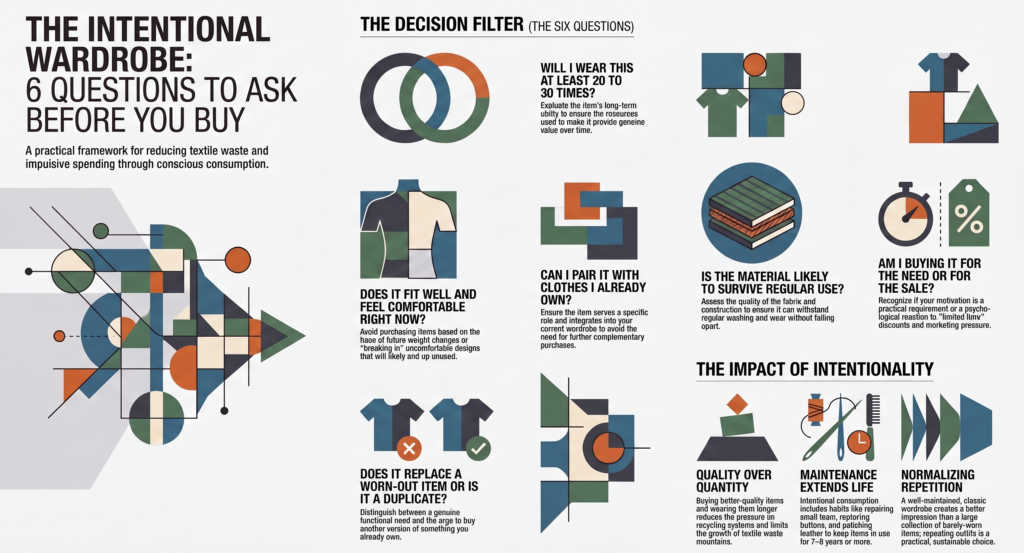
Before buying clothes or shoes, I try to ask a few basic questions:
- Will I wear this at least 20 to 30 times?
- Does it fit well and feel comfortable right now?
- Can I pair it with clothes I already own?
- Is the material likely to survive regular washing or use?
- Does it replace something worn out, or is it simply a duplicate?
- Am I buying it because I need it, or because it is on sale?
These questions do not eliminate every unnecessary purchase. They do make me more aware of why I am buying something.
Maintenance Is Part of the Plan
Buying less only makes sense if we take care of what we already own.For clothes, that means washing them properly, repairing small tears, replacing buttons and storing them well. For shoes, it means regular cleaning, polishing leather, replacing laces and repairing soles before they are beyond saving. These are small habits, but they extend the life of items that would otherwise be replaced too early.
A More Realistic Goal
I do not think everyone needs a minimalist wardrobe. I certainly do not have one. But I do think most of us can buy a little more slowly, use what we own a little longer and become less concerned about repeating clothes. My wardrobe is not perfect, and it is not meant to be a template. It is simply my attempt to consume with a little more intention. I do not need a new outfit or a new pair of shoes every time I leave the house. And I have become comfortable with that.
Well said. Echo my own thoughts well.